














How is crew called from the deck on a yacht?
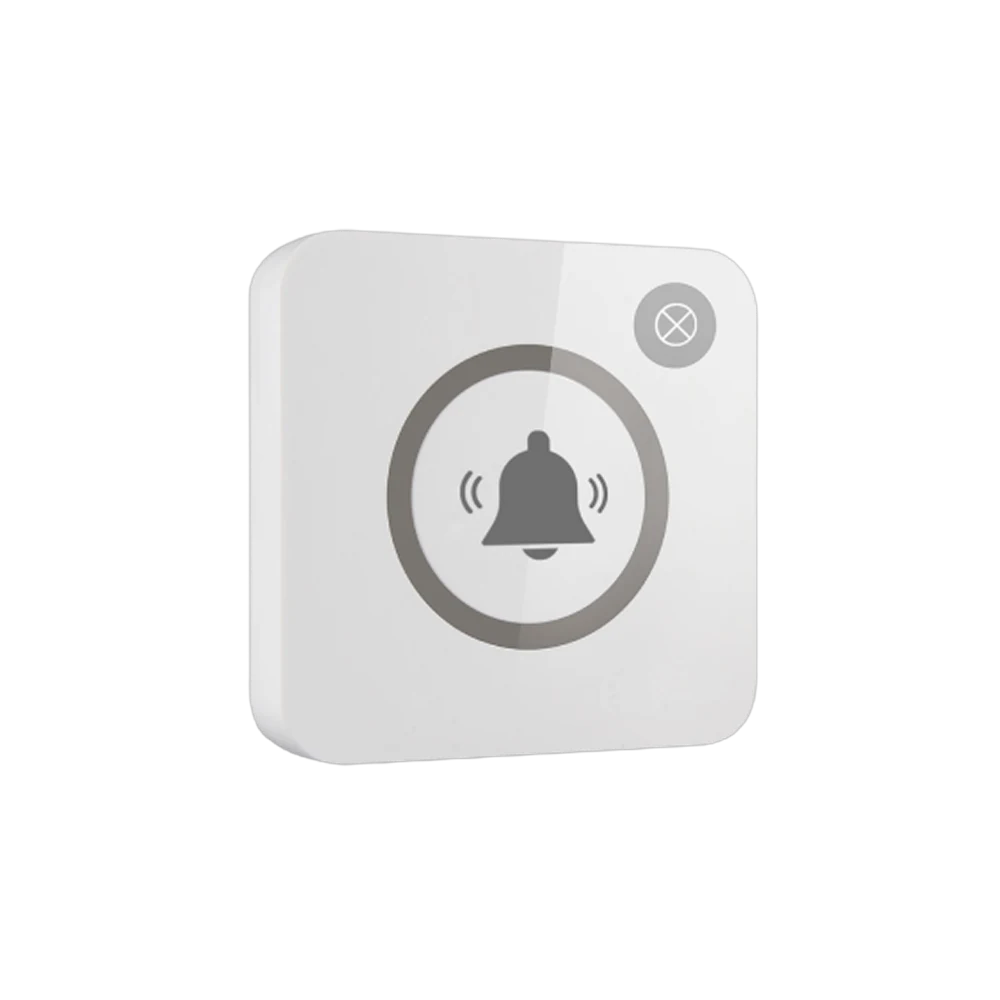
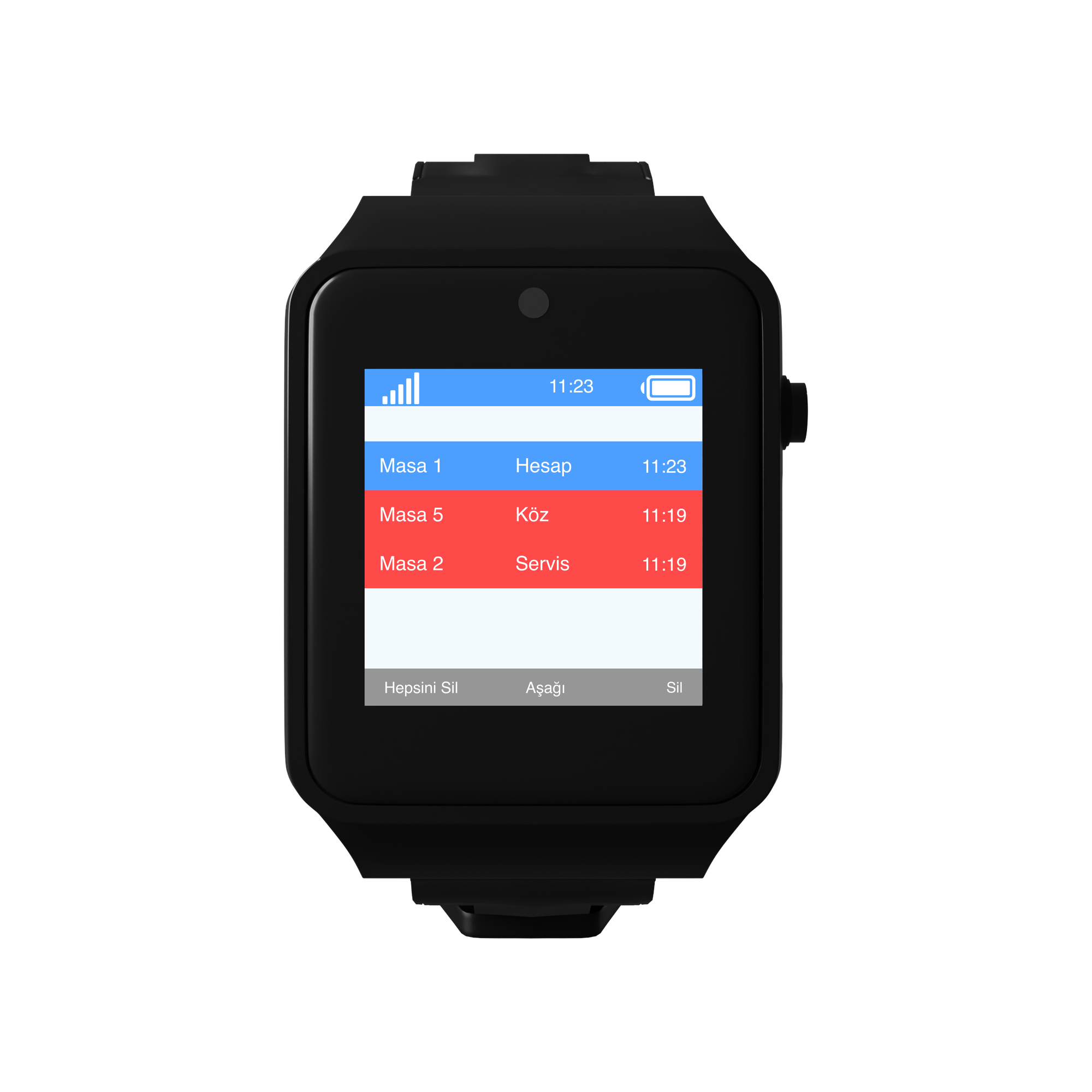
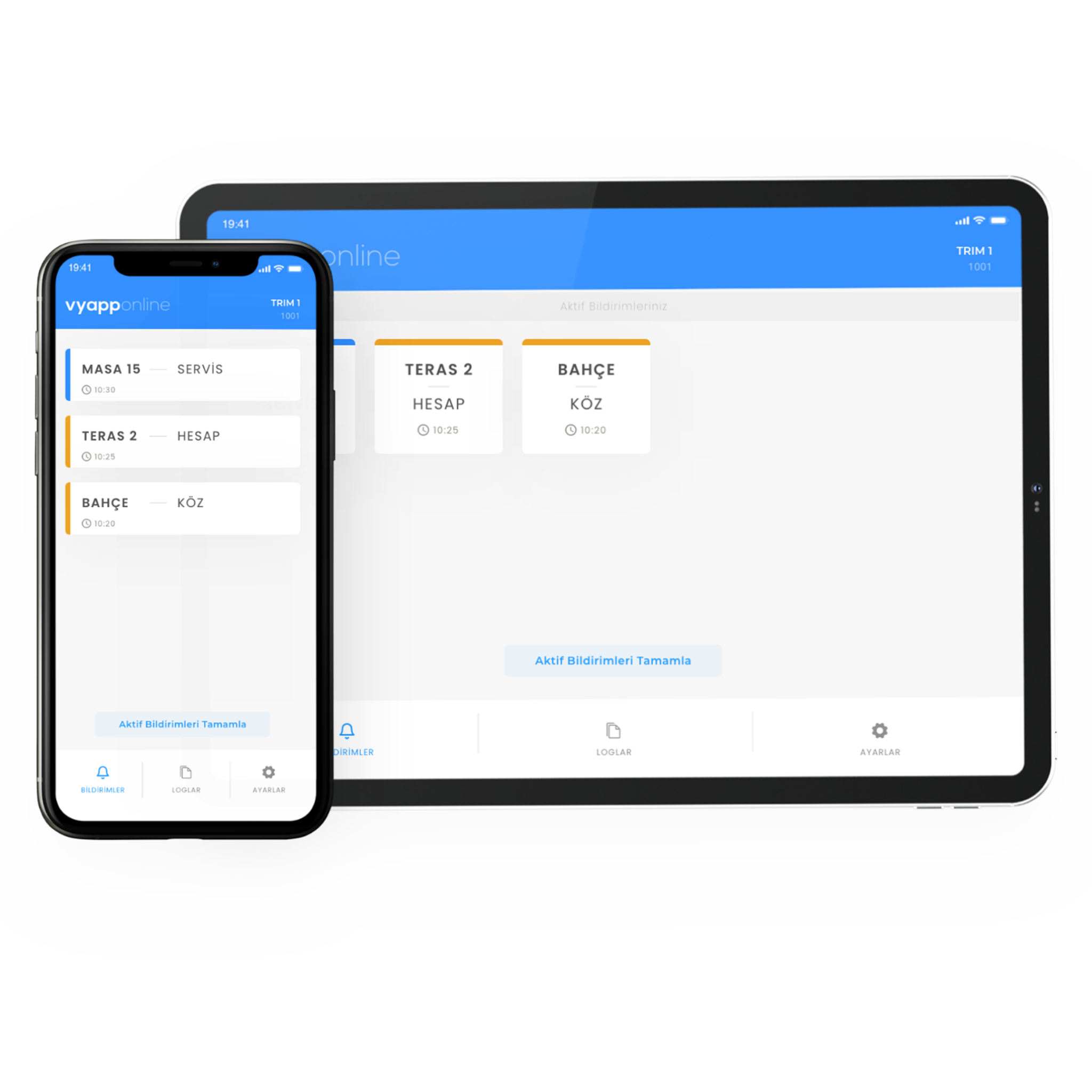
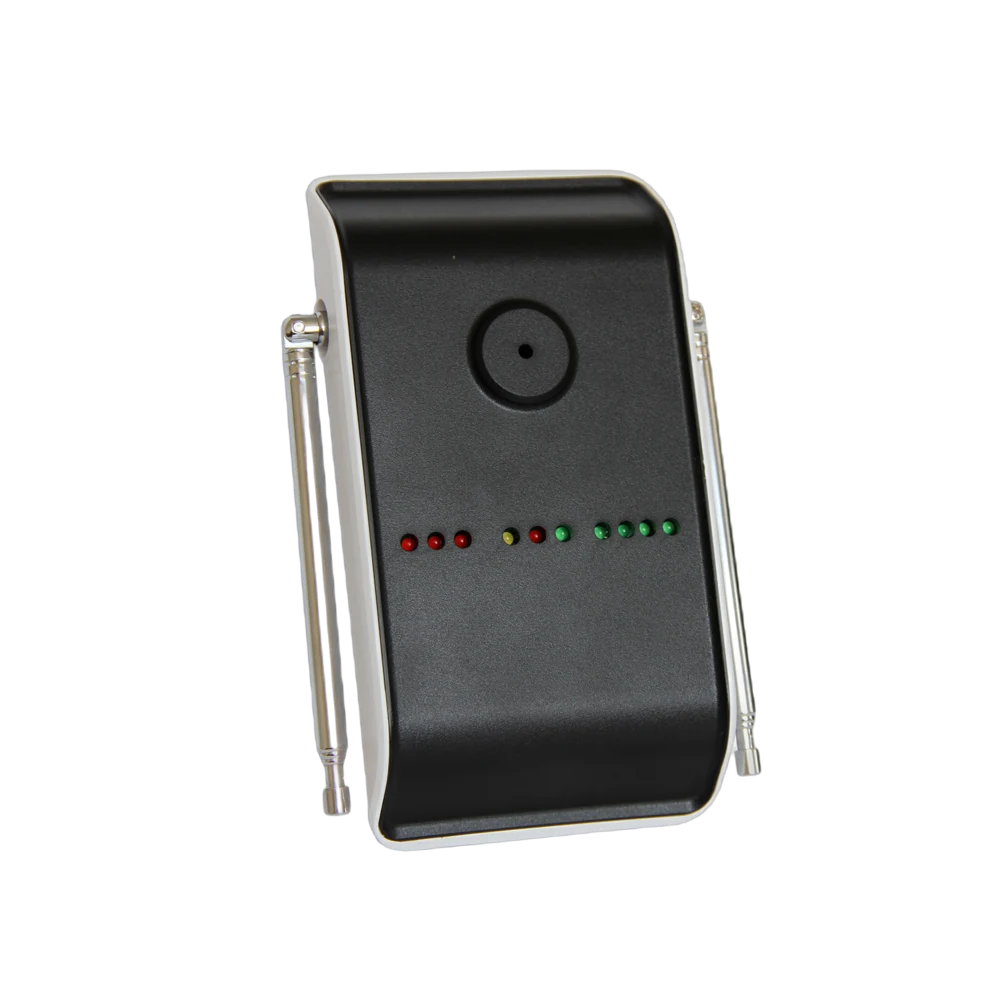
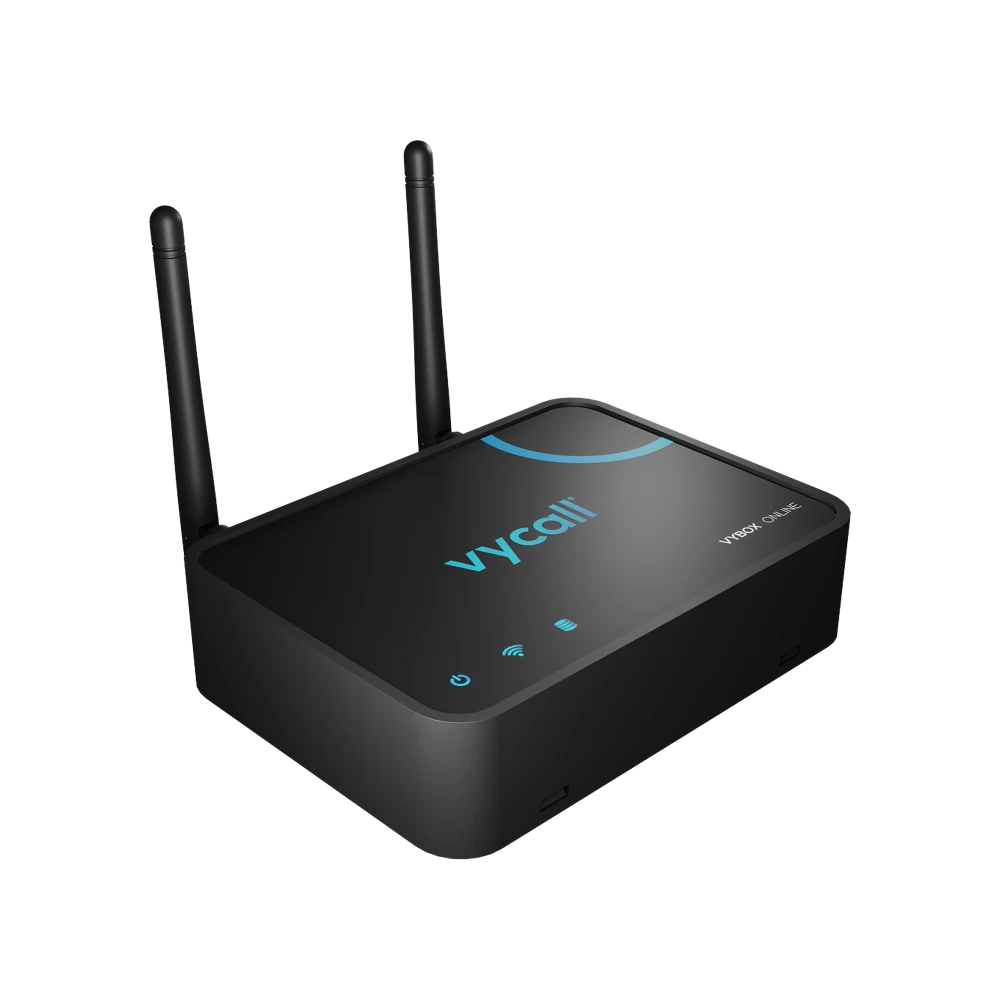
The guest sitting on deck does not call down or take the stairs; they press the button beside them. The notification goes to the crew on service at that moment — "Flybridge · Service" — and whoever comes knows which point they are going to and why. Which device it lands on is chosen to suit the boat: the crew phone, a pocket pager or the screen in the galley. On long boats and multi-deck layouts a repeater goes in between; with VyApp Smart Call notifications arrive instantly over the internet.
Below we describe how this is set up on board: which points get a button, what each key carries, who receives the notification and how a day goes.
Which points get a button, what does each key do?
Call points on a boat are set by where guests sit; every deck is defined separately.
| Area | Where the button goes | Key 1 | Key 2 |
|---|---|---|---|
| Flybridge and upper deck | On the side table or beside the console | Service | Refreshments |
| Aft, seating group | Fixed to the table | Service | Refreshments |
| Foredeck sunbathing area | Wet area body, fixed | Service | Towel |
| Main saloon | On the side table | Service | — |
| Guest cabin | On the bedside table | Service | — |
| Gangway / passerelle | On the bulkhead, at the entry point | Crew | Captain |
Why two keys? Because on a boat the difference between "come" and "bring" means going below and back up. When the refreshment key is pressed the crew leave the galley with it in hand; they do not come up to the deck empty handed and go back. In the sunbathing area the second key is usually towels.
What happens on the guest side?
One touch. The light flashes once and the call is seen to have gone. The guest does not call down, does not take the stairs and does not phone the crew.
On charter boats this detail goes straight to guest satisfaction: a guest who has to raise their voice to ask for service does not feel comfortable. With a button the request goes quietly.
Who receives the notification, on which device?
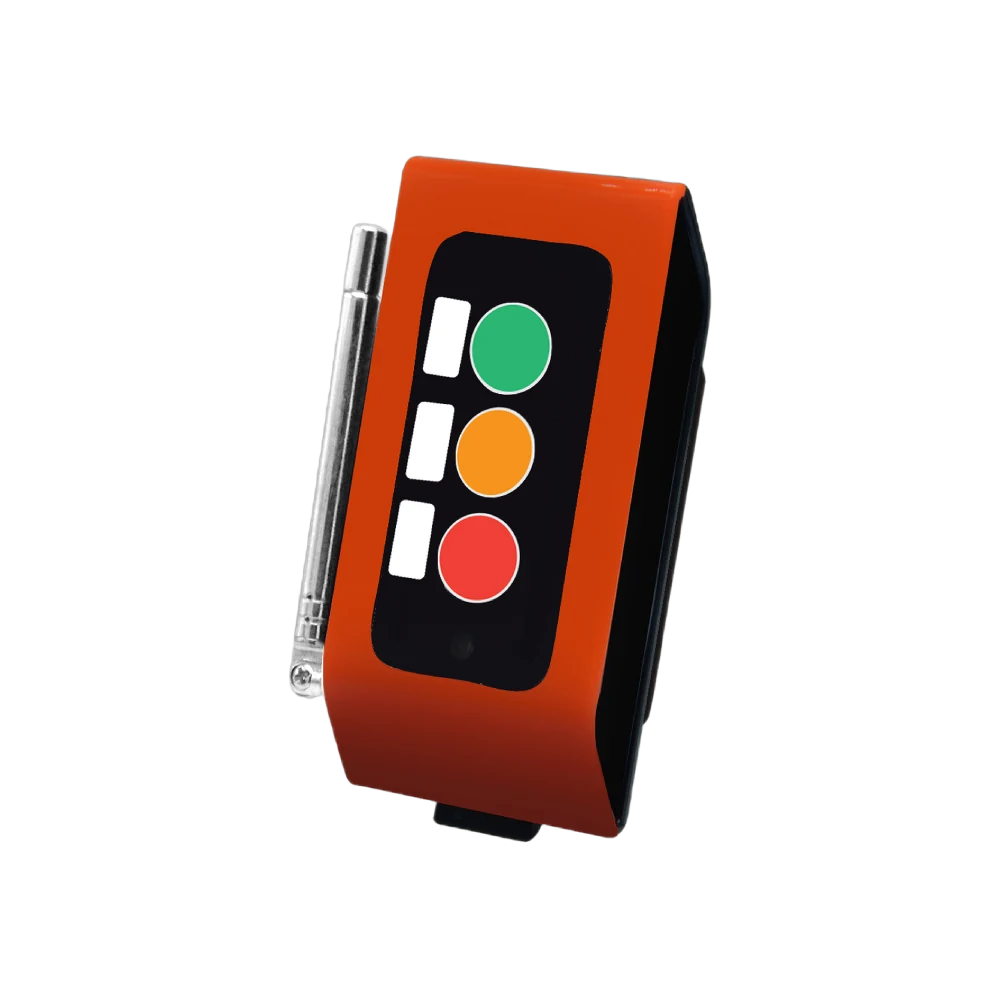
- To the crew's pocket pager — A35WP. The most preferred route in uniformed service; it alerts by vibration and makes no sound on deck.
- To a phone — with VyApp Smart Call. The crew receive it on their own phone and see it in the marina or off the boat as well.
- To the screen in the galley or crew mess — a D20 display. The waiting requests stay on a list.
The information shown is always in the same form: point + request. "Aft · Refreshments". Point names are defined with the boat's own terminology.
The same notification can reach more than one device. On most boats the pager of the crew on service and the galley screen work together.
How does a day go?
Morning, at anchor. Guests come out to breakfast. The button aft carries the first call of the day.
Midday, sunbathing. The foredeck button carries towel and drink requests. Instead of constantly checking the deck, the crew come up when called.
Swimming break. Movement increases between the platform and aft; water and towel requests concentrate here.
Evening, in the saloon. The indoor buttons work. Service stays quiet; the crew do not have to look into the saloon every five minutes.
In the marina. The gangway button becomes the entry point for guests and visitors; whoever comes up the passerelle is met without waiting.
How many buttons are needed?
A typical distribution for a mid-size motor yacht:
| Area | Quantity | Button |
|---|---|---|
| Flybridge and upper deck | 3 | B300, 2 keys |
| Aft seating group | 2 | B300, 2 keys |
| Foredeck sunbathing | 2 | B300, 2 keys |
| Main saloon | 2 | B300, 2 keys |
| Guest cabins | 4 | B300, single key |
| Gangway / passerelle | 1 | B300, 2 keys |
| Total | 14 buttons |
On the receiving side: pocket pagers for the crew on service, one screen in the galley, VyApp Smart Call for the captain and the chief. On long boats and steel hulls a repeater goes to a midpoint.
What is watched during installation?
Salt and water. A water resistant body is chosen at outdoor points; sea conditions ask for a different durability than an indoor button.
Sun. A button in direct sun is specified with a white body; a dark colour heats up and the print fades.
Fixing. Nothing left loose stays in place on a boat. The button is fixed to the side table or the console.
Hull material and range. Steel and aluminium hulls make signal harder; a site survey is done between the lower decks and the flybridge and a repeater is added if needed.
Point names. The names in the system are defined with the boat's own terminology — "flybridge", "aft", "platform".
Printing. The boat's name and the request wording are UV printed on the button; on charter boats this detail gives guests a professional impression.
